
The Ultimate Guide to Booking the Perfect Corporate Meeting Venue in Nigeria
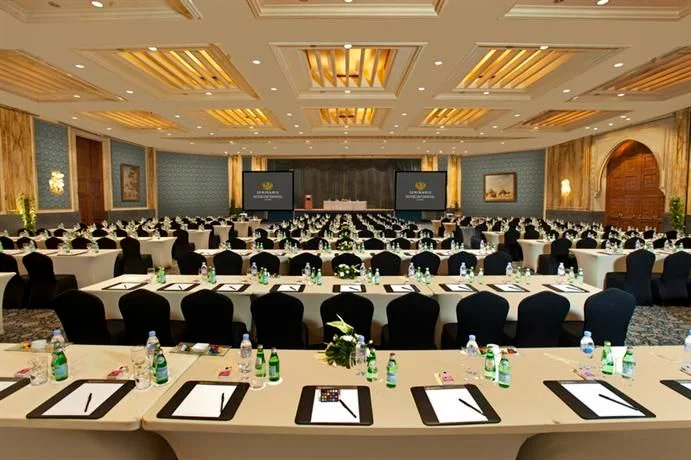
Planning a corporate meeting? Discover how to choose the perfect meeting venue in Nigeria covering location, facilities, capacity, and budget tips
Why Your Meeting Venue Choice Matters More Than You Think
The boardroom table you sit around, the lighting above your head, the quality of the Wi-Fi connection, the ease with which your out-of-town guests found the building, all of these factors shape the outcome of your meeting before a single agenda item is raised. Choosing a corporate meeting venue in Nigeria is one of the most consequential decisions an event planner will make, yet it is often treated as an afterthought, something to be sorted in the final days before the meeting itself.
In a country as dynamic and geographically varied as Nigeria, where Lagos traffic can add two hours to a twenty-minute commute, where power supply remains a genuine planning concern, and where the expectations of international and local clients differ sharply, the stakes of getting your venue choice wrong are unusually high. A meeting that should have sealed a partnership can unravel simply because the projector failed, the room was too hot, or guests from Abuja could not find reliable accommodation nearby.
This guide is designed to walk you through every consideration that matters when booking a corporate meeting venue in Nigeria, whether you are organizing a small executive briefing for ten people, a departmental strategy session for fifty, or a large-scale conference for several hundred delegates. By the end, you will have a clear framework for evaluating venues and a set of questions to ask before you commit your deposit.
Step 1: Define the Purpose and Tone of Your Meeting
Before you open a single browser tab or send a single enquiry to Venues.ng, you need to be crystal clear about what kind of meeting you are organizing and what impression you want it to make. A pitch meeting with a potential investor requires an entirely different environment from a team brainstorming workshop or an annual general meeting for shareholders. Ask yourself: Is this meeting formal or informal? Is the goal to inspire creativity, to close a deal, to train staff, or to celebrate a milestone? Who is attending, internal staff, external clients, government officials, international partners? The answers to these questions will directly influence the suitability criteria you apply to every venue you consider.
A venue that works beautifully for a creative workshop, open-plan, casual, full of natural light, might project entirely the wrong image for a high-stakes financial negotiation that demands gravitas and privacy. In the Nigerian corporate context, culture also varies significantly by industry. A tech startup may prioritize a modern co-working-style space with breakout zones and relaxed seating. A law firm hosting a client event will expect polished lobbies, quiet corridors, and impeccable service. Understanding the expectations of your specific audience is the first filter you should apply.
Step 2: Location, Accessibility, and the Lagos Traffic Reality
Location is not simply about prestige or address, in Nigerian cities, location is fundamentally about logistics. If you are hosting a meeting in Lagos, you must think carefully about which side of the bridge your attendees are coming from. Holding an 8 a.m. meeting on Victoria Island for guests who live on the Mainland is a recipe for poor attendance and frustrated delegates. Similarly, hosting an event in Ikeja for guests based on the Island can create equally painful commutes. The ideal venue is located in a central zone that minimizes travel time for the majority of your guests.
For conferences and events drawing attendees from across Nigeria or from abroad, proximity to the airport is a critical factor. Venues in Lagos that offer easy access to Murtala Muhammed International Airport, or in Abuja near Nnamdi Azikiwe Airport, reduce the travel burden for guests who are flying in. Also check whether the venue sits close to hotels that can accommodate overnight guests, and whether the road access to the venue is reliable, some otherwise excellent venues become inaccessible during heavy rainfall due to flooding. Parking is another practical consideration that is frequently underestimated. If your attendees are driving, does the venue offer dedicated, secure parking spaces?
Step 3: Capacity, Room Layout, and Comfort
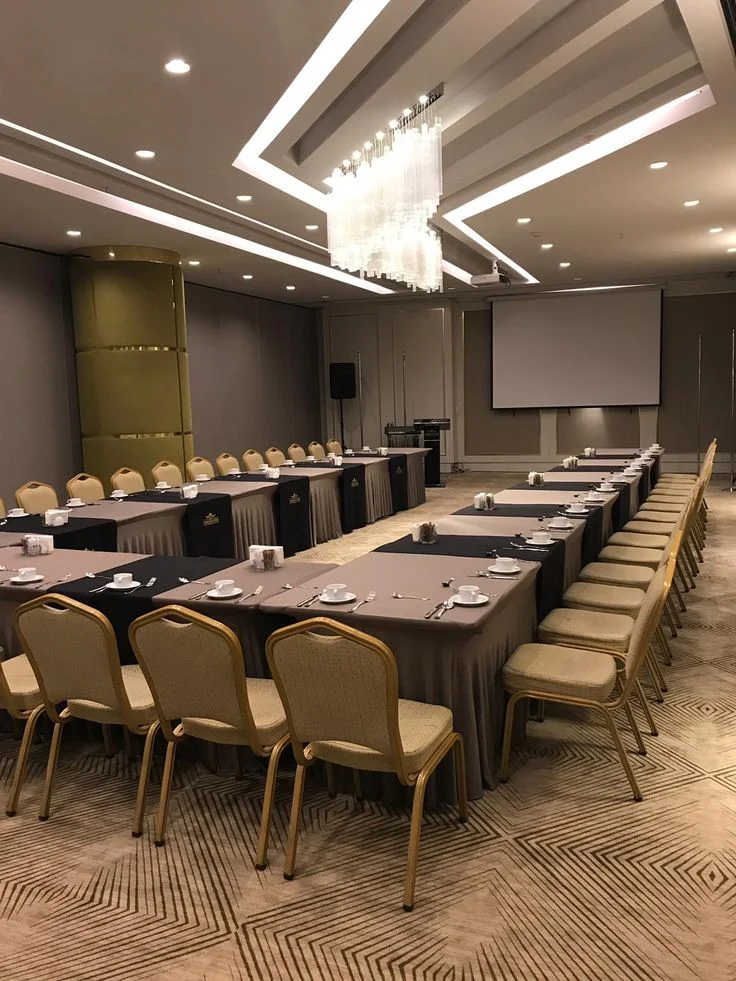
One of the most common errors in venue booking is choosing a room that is either too large or too small for the expected attendance. A meeting of fifteen people in a room designed for one hundred will feel hollow and impersonal; conversely, squeezing fifty attendees into a space meant for thirty will be uncomfortable and distracting. When assessing capacity, always ask the venue for the maximum occupancy in different configurations, theatre-style, classroom-style, boardroom-style, and cabaret-style. Be specific about which layout you need when requesting capacity figures.
Equally important is the quality of sightlines in the room. Can every delegate see the presentation screen without craning their neck? Are there pillars that obstruct views from certain seats? Is the room acoustically designed so that speakers can be heard clearly? Also confirm that air conditioning is reliable, independently controlled by room, and supported by a generator. A meeting room that becomes unbearably hot halfway through the morning because power is interrupted is a venue you only use once.
Step 4: Technology, AV Equipment, and Connectivity
The modern corporate meeting is inseparable from technology. Whether you are running a presentation, conducting a video conference with overseas partners, or simply needing to display data on a screen, the quality of the technology infrastructure at your chosen venue will define whether your meeting runs smoothly or descends into chaos. When evaluating venues on Venues.ng, make a checklist of AV and technology requirements specific to your event. Do you need a high-resolution projector or LED screen? Will you be connecting laptops from multiple presenters, and does the venue have the right adapters?
Connectivity is a separate but equally critical consideration. Ask the venue directly about the speed and reliability of their Wi-Fi. Many Nigerian venues will claim to have internet access, a claim that technically covers everything from a fiber-optic connection capable of streaming HD video to a single router shared by fifty devices struggling to load a webpage. Request the specific download and upload speeds, ask whether there is a dedicated bandwidth option for your event, and find out what backup connectivity exists in case the primary connection fails. For hybrid meetings, you will also need a quality microphone system and a camera positioned to capture the entire group.
Step 5: Catering, Refreshments, and Hospitality
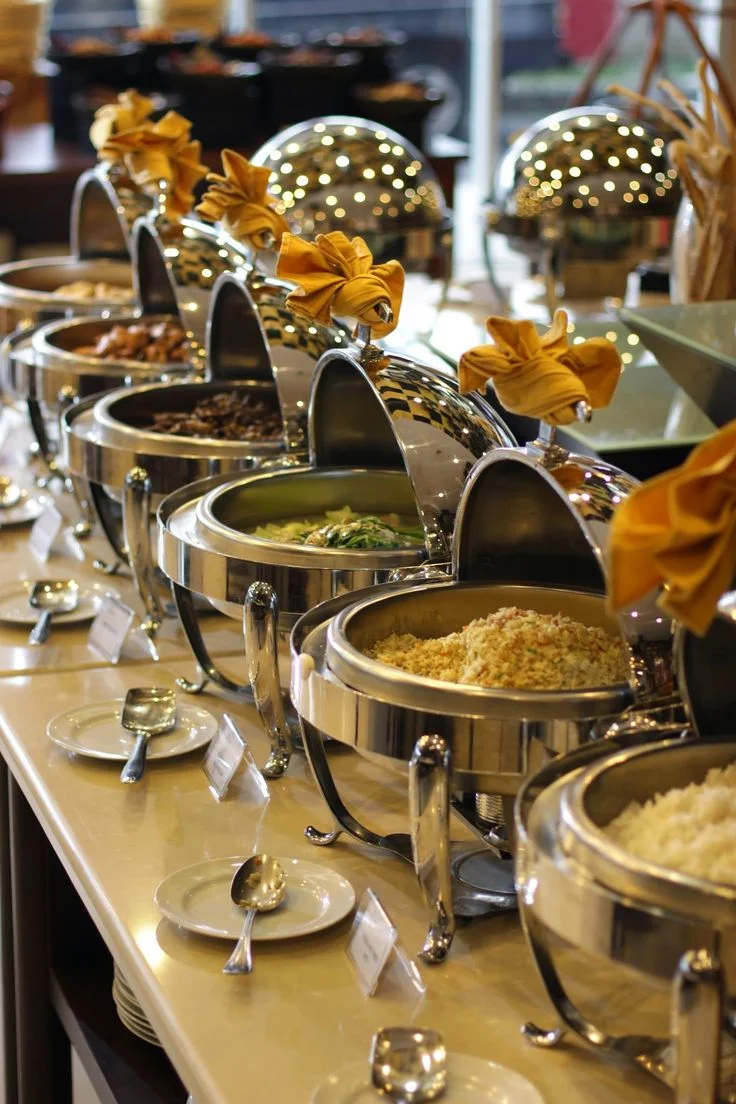
The quality of the food and drink provided throughout the day has a measurable impact on energy levels, mood, and engagement. For a half-day meeting, at minimum arrange for tea, coffee, water, and light snacks on arrival and during any break. For a full-day meeting, a proper lunch break with a varied menu is essential. Always ask to see the catering menu in advance, taste-test if the event is large enough to warrant it, and confirm whether the kitchen can accommodate dietary requirements including vegetarian, vegan, halal, and allergen-free options. Beyond the food itself, pay attention to how meals will be managed logistically, will there be a dedicated catering team present throughout the event?
Step 6: Cost, Contracts, and What to Watch Out For
Meeting room hire rates in Nigeria range from modest co-working space charges to premium full-day rates at five-star hotels. Before comparing prices, make sure you are comparing like for like. A venue that quotes a low room hire rate but charges separately for AV equipment, Wi-Fi, catering setup, parking, and security may end up costing significantly more than a venue with a higher headline rate that includes all of these elements. Always request a detailed written quote that itemizes every cost. Ask about room hire for your full setup and breakdown time, AV and technical support fees, catering costs including service charges and taxes, parking fees, and cancellation policy terms.
Conclusion: Use Venues.ng to Simplify the Process
Choosing the right corporate meeting venue in Nigeria does not have to be a stressful, time-consuming exercise. Platforms like Venues.ng exist precisely to simplify the process, bringing together hundreds of vetted venues across Lagos, Abuja, Port Harcourt, and other major cities, with detailed information about capacity, facilities, pricing, and availability all in one place. Use the checklist framework in this guide, purpose, location, capacity, technology, catering, and cost, to filter your options systematically. The right venue does not just host your meeting; it elevates it. Take the time to choose well, and the return on that investment will be visible in every handshake and signed agreement that results from a meeting well run.